Transcript
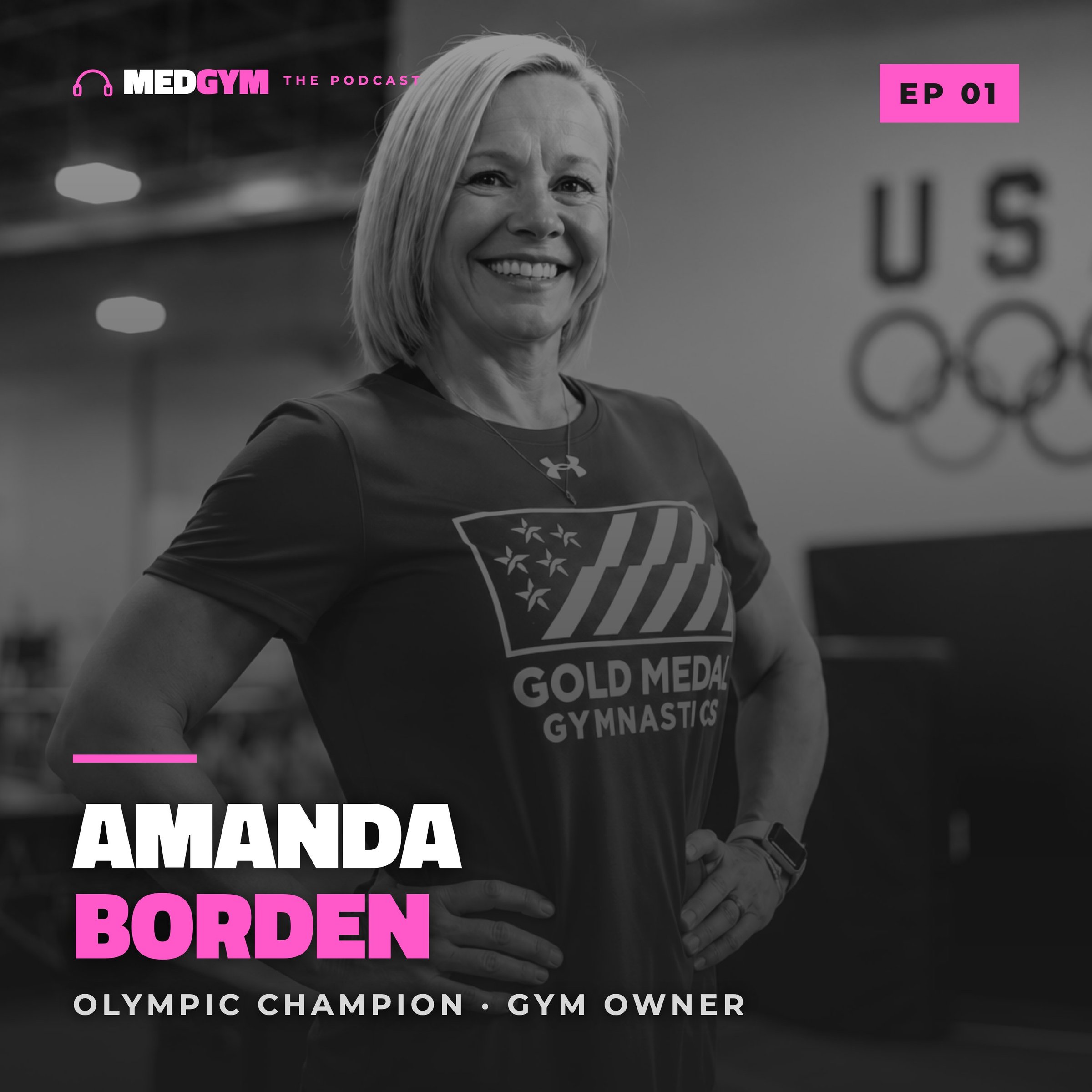
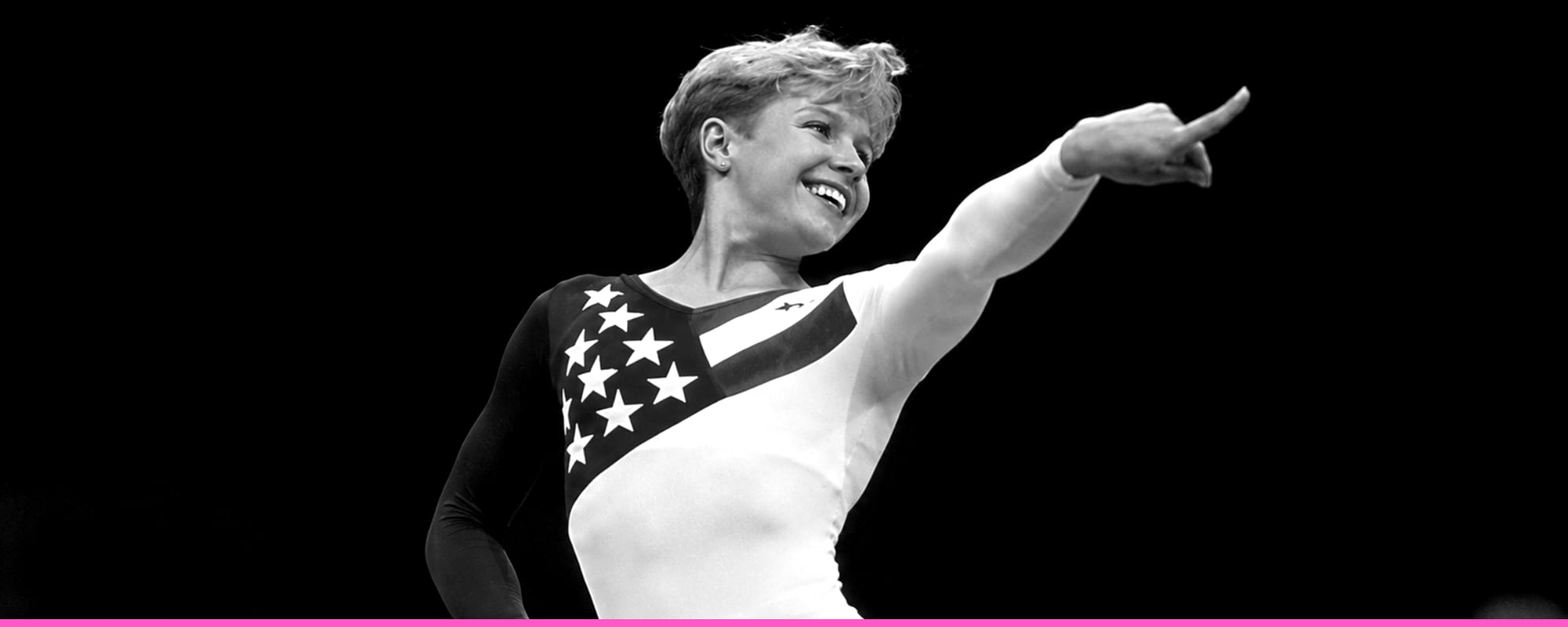
Gina Pongetti: Welcome everyone to the MedGym Podcast. I'm Gina Pongetti Angeletti, physical therapist and someone who has spent a career in the gap between what an athlete's body can do and what it's being asked to do. This show is about health in the sport across three pillars: mental, physical, and training. A lot of people leave this sport when the sport is done with them, but my guest today never left. 30 years on, she still lights up talking about it. Amanda Borden was the captain of the Magnificent Seven, the seven women who won the first Olympic team gold in American gymnastics history in Atlanta 30 years ago in 1996. But I'm just as interested in everything that came after. She built her gym. She has spent far longer coaching this sport than competing in it. And she's raised a level 10 gymnast of her own, her daughter Kennedy. Who will compete for Alabama in NCAA next season? Athlete coach, Jim Owner, Jim Mom. Four different seats in the same sport, and she's still in love with it. Most importantly, my friend, Amanda, welcome to the MedGym Podcast.
Amanda Borden: you're making me cry already. I'm glad to be here. Thank you for having me.
Gina Pongetti: You deserve every bit of it. Yes. Thank you for being on. We are so excited. What a year this is for the 30th anniversary. Does it feel like 30 years?
Amanda Borden: Yes. I cannot believe it's been that long, but no. I I I just pinch myself because first of all, I mean, I can't even be that old, but it's just such that's
Gina Pongetti: We are not that old.
Amanda Borden: right, such a highlight of my life. and already as we approach getting our team together and, you know, doing some fun things, like I've already had so many emotional moments and hearing people's memories and We're just excited to have a little bit of time just as friends too and not be, you know, in the light of gymnastics and just really catch up with each other.
Gina Pongetti: I love it. What's the first thing that comes back to you from your time in Atlanta?
Amanda Borden: You know, I've felt like I've been reliving the moment a little bit with different interviews and talking to different people and reading, you know, what all the rest of my team talks about too. you know, I think my my two big things is or you know, the two the biggest thing was walking into the Georgia Dome for me was it just really the impact of what the Olympic Games really is. And to have that in my own country with So many people rooting for us just really, you know, brought this perspective of like, I've always done gymnastics because I love it. I'm still here because I love it. And I'm gonna do my best out here on the Olympic floor because I love it. and so that created a lot of emotion. But I also think at at the 10 year mark, I brought up that we were dubbed the Meg Seven back then because of what we, you know, accomplished right then in that moment. But I think My bigger takeaway thirty years later is that I would say that we're more magnificent women now, in the things that we've done since the Olympics and I think that's pretty impressive. And one of them being that we have stayed in touch and I would consider
Gina Pongetti: Yes, yes.
Amanda Borden: them my friends.
Gina Pongetti: you were the captain and over many years in many sports there are different ways that sports pick captains. Sometimes coaches do, sometimes teams do. Do you remember how that was decided and what it involved and then when you heard how it made you feel?
Amanda Borden: Yeah, very vivid memory for me. you know, a small glimpse is I was on the elite scene in ninety-two, thought I qualified and then didn't go. So this is now four years in the making, where I was always the athlete a little bit on the bubble. You know, I I dreamed of making the Olympic team, but I knew it was gonna take perfect days. For that to happen. And so when my dream came true, I also realized I was not the best athlete on the team. but I knew in my heart that I had something more to contribute. I didn't really have a title to that or knew what that was gonna look like. So we were stretching at the end of a practice in Atlanta at the local gym we were training at. We weren't at a big facility, and they basically asked us to vote on who we wanted for the captain. And I wrote down our fearless leader in my mind, Shannon Miller. And everybody else voted for me. And that's also gonna make me teary. because the fact that these girls that I looked up to and admired and was amazed with in so many ways, saw something special. That I think I knew I had, but I just didn't know what that looked like when you're not the most experienced. I mean, there were three Olympians already on the team. You know, JC Phelps won the trials. You know, I just they had already won racks of medals, you know, and I I knew I was a good athlete, but I knew that there was something more important. see that, I think really
Gina Pongetti: It sits differently when it's not just from coaches that recognize it, but from your peers as well. I think that the especially with the caliber of women that you were on the team with, hearing that from them just sits heavy. which is fantastic.
Amanda Borden: Yeah, just very special moment.
Gina Pongetti: what did that team get right per se? So seven teenagers, so much pressure, so much youth, what made it work?
Amanda Borden: Well, all of us had competed, you know, with each other at some point, but not all seven of us had been on the same team. And I think that was something really unique. We had relationships with each other in some capacity. We knew the strength that we were bringing into the team. But I think, you know, from our coaches, you know, to ourselves, what we did right when we were training at our training camp ahead. Mary Lou Retton actually came in and talked to us. And she was the one that said, you know, the Olympics is in your country. Like, press is gonna be all over. It's gonna be, you know, back then the newspaper and on TV. That was our press.
Gina Pongetti: Yeah. Yep.
Amanda Borden: but she's like, Don't listen, don't watch, don't listen. Just, you know, stay into you guys. And when I say I walked into the Georgia Dome just saying I'm Amanda from Finneytown, Ohio, which is a small part of Cincinnati. That was my mentality. You know, the the small town girl had worked her way to get here. So just keep doing what you've been doing. And I think all of us in some capacity had that mindset. Like we're not here to change anything or do anything. We're here to just do our best and stay in our zone. And so even after the day one competition, you know, we were in second. I think most people figured if we were gonna win a medal, it was gonna be bronze or silver anyway. But it didn't that didn't phase us. We didn't feel like we were going into day, you know, day two playing from behind or anything like that. You know, we just kept staying in the day, staying in the moment. Our coaches kept us on our training plans. because we were able to use the whole gym to train. We weren't in one squad, what like you have to do quite often when you don't have the flexibility of, you know, having an off-site training. And
Gina Pongetti: Yep. Right.
Amanda Borden: again, I just think that those are all lead ups that kept us in our in our little bubble, in our little world, doing our little thing, that when you brought all those little things together, it just made, you know, one of one of the greatest teams.
Gina Pongetti: Let's go to after the Olympics and talking about looking back, just a a couple health and wellness questions for you. What do you think that you did or that Mary Lee did, or that life allowed you to do that let you stay healthy and durable and for the long run? And what are things that you didn't do and wish that you did and oof got lucky, kind of getting getting
Amanda Borden: Ha ha
Gina Pongetti: through things?
Amanda Borden: Yeah, I do think I do think I have a durable build. I'll start with that. I think I was always a very strong kid by nature. My pitfall was flexibility. So early on I had quite a few injuries that had flexibility issues, like you know, I had the avulsion fracture hamstring. then I pulled the other one, then I hurt a calf muscle and so early on.
Gina Pongetti: For those that don't know, the avulsion is when the tendon also pops off the bone or takes pieces of bone with it. Really, really different than a strain. Yeah. Well, we also didn't have
Amanda Borden: Yes. And we didn't even barely know what that was. Yeah, back then.
Gina Pongetti: MRIs at the ready in two seconds for,
Amanda Borden: Yeah.
Gina Pongetti: you know, four hundred dollars on the side. So I think
Amanda Borden: Yeah.
Gina Pongetti: that that was a big difference in diagnostic procedure too.
Amanda Borden: A hundred percent. But what I had was a coach and parents that listened to me. So I felt like I always knew my body. I could always talk to my parents about it, number one. And I felt like I could talk to my coach about it. And I think that because I had support on both sides, if you know, my coach was like, Well, can you push through or can you work? I I was able to give that a yes or no versus like, you know, am I in trouble? and so I think that was really important early on for me because I I learned to have a voice. In fact I felt like sometimes I had a voice for teammates because I'm like, I don't know if she should be doing that. What I do think Mary Lee also did for me was she taught me to have the mindset that if you don't know, never be afraid to say it and and keep learning. So if you have tight hamstrings, like we're not gonna just pull your leg and stretch you until you're more flexible, like why? Why is it tight? What do we need to do differently? What are we doing different in your training? What do we need to pay attention to that maybe my young teammate JC is going to be able to do that a maybe 19-year-old Amanda is not going to be able to do? And how are we still building training that's still getting the type of maybe mental or physical reps that we need to be successful at this level without hurting my body or whatnot? And so I feel like She, you know, I always wonder, you know, if if I am just a learner by nature too, or if she taught me to have that mindset as an athlete and it's trickled to everything else in my life. I feel like by
Gina Pongetti: that matters.
Amanda Borden: the the last year I felt really empowered that I definitely didn't know the way to to make it on the Olympic team. I needed my coach in so many, you know, capacities. But, you know, our assignments turned into I want you to hit ten beamer teams that you'd want to compete, you know, at at trials or whatever. And then, you know, I would be like, Yeah, that wasn't it and she'd be like, What what do you mean? Like what do you not I just felt like I was a little off on, you know, whatever the detail was. And she's like, No,
Gina Pongetti: Right.
Amanda Borden: that was a nine eight five or better. Like, check, you nailed it. And so it got to the point where then I was the one making the decision of was that good enough? Do I need another one? Or do I am I done? You know, and I feel like that mindset really helped me get into even at the very end of my training. I mean, I knew what made me feel my best in How I slept, what I ate, my training, my therapy, my and you know, and yes, that is also a very rigid piece of my personality, but I wasn't dependent on her giving me the like that should count. It was very I don't know, everything felt like it was my decision. And I don't know that it was truly my decision. I think there is definitely, but that's how I believed and felt. And so
Gina Pongetti: Yeah, right.
Amanda Borden: on the bad days. It made it manageable and on the great days it made it manageable, you know, emotionally. And I think that's a huge piece of
Gina Pongetti: Yeah.
Amanda Borden: the puzzle.
Gina Pongetti: So moving moving from all of those answers into you building this amazing program at this amazing gym, that in my perspective, and this is professionally speaking and as a friend. You are creating a platform for kind coaching that is still strict in following the dynamics of making sure that basics happen and that strength happens and that things are followed, but you can be good and kind and respectful and create these amazing athletes. So tell us about the the gym and what made you want to open a gym in the first place.
Amanda Borden: well, I went to school to be a teacher. I loved kids. I knew I wanted to teach. so I planned on, you know, being a K through eight teacher. And I started teaching math. That was my favorite subject. And then I got talked into, you know, run a gymnastics camp at the school and then run up after school classes. And then I realized like I can actually just Teach my favorite thing in the world. and I I didn't know where that was gonna go. I didn't open gold medal gymnastics thinking I want a competitive team or I want to coach elite gymnastics. I just enjoyed coaching. And so, you know, for the first year or so, I did not even pursue that direction. I did recreational only. It was for boys and girls. and it just not The program grew quickly, which was amazing. But what really grew was my passion for it and my desire to teach the sport, but also I think teach everything else that comes with it that turns us into amazing people. And yes, there are some things that, you know, maybe aren't the greatest thing about gymnastics, but I think when you're educated about why, you know, we do these things or why we don't do these things, again, you're helping kids be able to make up their choice or make up their mind, you know?
Gina Pongetti: the word you used earlier that I use often in my treatment is empowerment. And you're empowering the athletes to be better people, but also the coaches around you to also empower the athletes. So it's this I think it's your theme.
Amanda Borden: because I was raised in this type of environment as an athlete, you know, it it almost seemed normal, like, you know, this is what this is what everybody experienced. And what I started to realize is that as I hired coaches. I was like, huh, okay. Well, not everybody experienced it like this. And how do I teach, you know, the adults or the coaches that, you know, are coming into our program to see coaching gymnastics differently too? And so that is obviously something that I continue to navigate because we all come to, you know, the sport as coaches with very different reasons, backgrounds, knowledge, et cetera. But then the the flip. Side of it is empowering and teaching kids some of these skills through 22 years has definitely gotten more challenging. And obviously, that's a probably a whole nother discussion about all the things that I feel like have happened in kids' lives that are making some of these things more challenging. But, you know, having my daughter be a part of it, I just remember feeling like. I have no idea where this sport's gonna take her, you know, but what I do want for her is to be an empowered, strong young woman. Period. Like regardless.
Gina Pongetti: Whether she's on a I mean, I've obviously known Kennedy for years and watched her grow
Amanda Borden: Yeah.
Gina Pongetti: through through you, but I think watching her just decide I mean she had so much fun this year at nationals and she decided that She chose that because she wanted to have fun. you know, with with her week. I it's just there's a you're hoping that when you're not in the room that they're making the choices that they should make. And that's true empowerment. Okay, given any Tuesday or Wednesday random day at your gym, name three facets of what a healthy gym looks like for you. What is what makes the gym look and feel healthy?
Amanda Borden: Well, you know, obviously we take a lot of pride in just, you know, the way our facility feels when you walk in. we want every, you know, a big word in my life that I use a lot is joy. you know, when you walk through the door, you probably would see a totally different perspective based off which program you're in and all of those kind of things. But ultimately, it's bright, it's colorful, fun music and The body language of the adults in the building is very important. So that feel. and anybody that knows me, and and I always laugh because I'm sure my own coach would say I was one of the biggest feelers she ever coached. things had to feel right to me. I had to feel positive and good and believed in and all the things. And so that's a really big piece of what we try to create. I think I don't know how to make this like a one thing, but the culture in like our competitive environment, I feel like I'm really striving to teach kids that whatever your goal is, like you can do hard work and you can do it with joy. You can have fun doing it. and so I think that's another really big piece. And obviously there's some kids that have been raised in this. program and they've maybe heard that or experienced whatever that looks like. But we do get kids that come from other programs. And I find that interesting, like to hear their perspectives and stories. And it takes a lot of communication on our part as coaches, like building that trust and having them understand that, you know, I've been doing this a long time. And yes, there is this system in my mind that I know generally works to get you these skills and then put them together in routine and da-da-da-da-da. But if I'm so set on that one system, I'm not being a great coach or teacher. And so that system takes my communication and ideas and yours as the athlete. And so you know, I just think relationships is probably the other big thing or teamwork. I mean, our staff, you know, we all bring in a strength. We all bring weaknesses. And if we're not working together, like setting our own egos aside and working together to better the child, the program, the situation, then we're failing. And I think the same thing within the kids. I think that's the expectations. You know, there's some athletes
Gina Pongetti: Absolutely.
Amanda Borden: in the group that are gonna be your hardest workers and or the most talented or the cheerleader, and it's like We need all of those qualities to become a great team. We learn from that. we grow from that. I used to say as an athlete, people would say, Who's your role model? And I'm like, well, do you do you have time to hear them? Because I have about 20. And they I they were like certain qualities of these athletes that I I didn't want to be just like Shannon Miller, but her detail and precision amazed me. And that's what I wanted to be like in Shannon Miller. And you know, it was the Kim Zamescal like I had never seen somebody so powerful and so and I just was not. And so I wanted to be, you know, like her. I w I watched everything she did to be quick and powerful. And so just having that mindset of, you know, we we all are great. We all bring something and let's celebrate that, but we gotta own where we're weak and we gotta help each other out and learn so that, you know, we're making whatever we're doing better. 'Cause if not, why are we doing it? So
Gina Pongetti: Why we're doing So when I think it here's a tough question and something for good coaches. how do you handle it when an athlete who you see is truly been struggling with, let's just say back pain, is in the is in the gym and the mom says she's fine to come back, a doctor says she's fine to come back, and you just see that there is a dichotomy with that. You see her face, you see that she doesn't look confident, you see that she doesn't look like she's ready and Physically, no one truly knows what the answer is because the athlete might be holding back because they don't want to tell you that they're still hurting, although you do have great communication, they don't want to be left out. They might be saying something different to their therapist or their parents because their parents are paying money for gymnastics. There's all these variables that go into the truth and what that is. How do you as a coach handle that with the athlete in getting as much truth per se? out of them so that their return
Amanda Borden: Yeah.
Gina Pongetti: to the sport can be as respectful to them as possible.
Amanda Borden: Yeah. I mean my first choice is to build a relationship with their doctors and PTs. and obviously it takes doctors and PTs that are willing to do that. Not and I realize not everybody has time to do that. you know, but even again, like and I right now I only coach our level nines and tens for the most part. So I'm working with our highest athletes. I feel like at those levels. They're probably seeing their PT regularly. They have a relationship with them. And so, you know, if their PT's open to it and their families give them permission, you know, whether it's a phone call to me, whether they update me with appointments, send me an email. I teach the kids right from the get-go that, you know, I'm not the doctor or the PT. I've obviously been involved in this sport a lot, and some of these injuries I've had myself. And so I know a little bit about it, and I have a general idea of what I think I would recommend for a return to certain things, but your PT is gonna know best. And your PT is going to monitor the health of your body. And with that together, we then figure out the best play or plan to return to gymnastics. Because gymnastics is a unique sport, in my opinion, and I'm not discrediting any other sport, but If you have a PT that doesn't necessarily understand the sport, they sometimes will say, You're good to go. And I'm like, Good to go. We haven't done a run or a jump on anything, let alone on a hard punching surface with force and body weight and power. like we're gonna end up
Gina Pongetti: And that might be one of my biggest pet peeves by far, by far, is then the
Amanda Borden: Me too.
Gina Pongetti: athlete and the parent get in their minds that when they run to the gym today, they're going to be able to do things. And now Amanda's the bad person because she says, You can't do giants, you haven't put your arm over your head in six weeks. This doesn't or they'll
Amanda Borden: Yeah. Yes.
Gina Pongetti: say, Let's not vault, but you can do bars. And you're like, Do you understand the mechanics of both? Yeah. So the relationship that you have built
Amanda Borden: What? Yeah. So I think
Gina Pongetti: with them helps.
Amanda Borden: yes. Then I think, you know, if if we get our first choice, that really makes things helpful. But then again, I feel like it's educating definitely the athlete. I work with the older kids, but quite often now we feel like we need to really loop parents into. For example, you know, we have kids that are like, I'm allowed to do bars. Like, great, you know, they had a wrist or something. So, you know. Okay, great. So I I kind of come up with the plan, but they don't want to do any what I consider bar conditioning. And I'm like, well, let's review this. Okay. There's certain things like the conditioning's not here to to hurt your body. So it's not that I don't I want you to do all the conditioning and not do any of the gymnastics. But if I let you do the gymnastics and we don't ever do the conditioning or the flexibility, then I'm just setting you up to get injured again because. Conditioning, in my opinion, is a much more controlled, slower paces, not as much force. It's not always, you know, like force behind your body weight. A lot of times it's just a handstand, we're holding your body weight. We're not jumping back to the handstand, which is more than your body weight. And so educating them to understand that. And then I always try to have a sliding scale of what I feel like, you know, we're in pre season right now. Right now, in my mind, doing More conditioning and flexibility with basics on an injured body would be smarter than doing all the skills now and not strengthening and fleck getting you flexible enough to withstand what we know it's gonna take to maintain these skills. And then during season, we kind of do this. We go opposite, right? We we go into more of a maintenance stage where, okay, you can't do all this conditioning because doing that and your bar routines hurt your wrists. So now we have to come up to a happy medium, right? Like how much are we scaling back on both, or you know, vice versa. And so I try to I feel like that's a great way. The the struggle, because I don't want to act like this is, you know, easy and it works out,
Gina Pongetti: Ha ha
Amanda Borden: is getting sometimes all the truth from, you know, the kids as far as what they can and can't do, but also their pain. And then also parents, because Quite often they're overlooking some of it because they do, they want to make sure their kids can get in to compete. We only compete in this small window and it's now or never. And so there are these other pressures. And so that does make our job challenging. I feel like kids that I've coached for a really long time and built that relationship with, now it's really between us to to constantly build that trust. I had a a gymnast that had a bad shoulder, and bars is one of her best events. And She was devastated to not train the same way because she saw that this training plan works and she was very successful and she liked that feeling. And so we had to come up together with a plan like, okay, we need to modify and do these things. And here's how you're making up what you're missing, right? Whether it was mental reps, whether it was drills that didn't hurt as bad, or more of a basic. part of the skill. So you're not doing say ten full outs, but you're doing this drill, that drill, and this drill, which equals ten full outs, but you didn't even hurt your shoulder. and so that that piece is as coaches, part of our job is to educate our athletes on, you know, why do we do this many reps? Why do we feel like we need 10 bar routines to hit? Okay, well, because we need the endurance, the strength, the execution. That's fine. So when we need to delete some of those numbers, what what can we fill in that's still getting that same result? Because I think that's one big thing that's changed. I mean I watched I'm not listing any names, but I watched girls on my Olympic team do twenty beam routines a day with some serious level of gymnastics, right? I mean
Gina Pongetti: And this is what I was referencing before with your group of some people needed this and some people needed this.
Amanda Borden: Yeah.
Gina Pongetti: And if either one would have switched what the assignments
Amanda Borden: Wouldn't work.
Gina Pongetti: were, the ones that needed
Amanda Borden: Yeah.
Gina Pongetti: to do 20 would have gone ballistic if they had two. And the ones that did only
Amanda Borden: Ha ha
Gina Pongetti: two would have literally just physically not survived doing the 20.
Amanda Borden: Yeah. Hundred percent. But I feel like as an athlete, you have that little bit of innate quality. And here's how I really watched it was with my own daughter. Is there were so many things that I never shared about like me as an athlete. Like I liked a lot of numbers, but I at the end my body couldn't withstand that. So that's where Mary Lee came in educating me on how I could still get the kind of reps. But I felt like I needed to feel good, to feel prepared, to feel like I can nail this, but then know that I wasn't doing so much that like I wasn't gonna be able to compete. And so I never really said anything to her. And then she's my daughter started going like, I need more reps, I need more reps, I need more reps. And so I think through my own experience, but I also think through time and knowledge of our sport, there's so many great ways now that you can still get the amount of needed reps. I'm not talking full routines and all that kind of stuff that are actually probably more beneficial for the end result than just doing all that work. And I think if you can
Gina Pongetti: Yeah.
Amanda Borden: get your athletes to understand the why and buy into the the small things like visualization, I'm huge on it. You know, I mean like you can do five full bar routines in your head and you know have bloody hands that day couldn't even swing and you still gained something out of this. You're you know, and so it's teaching our kids to buy into that stuff and actually really doing it. And
Gina Pongetti: yeah, that's great.
Amanda Borden: I think one of my favorite things is watching an athlete finally go like, that does work. I don't have to do the full routine, or I can do
Gina Pongetti: Yeah. Right. Yep.
Amanda Borden: my beam routine down here on the laser beam because I just don't feel right today. And I just got so many perfect reps that I almost feel better. And so seeing that light bulb, I think, come on for them again, that word empowerment, right? It's like it gives them the power and control to realize like if they really want to be successful, there's no way around not working hard. So if they're gonna avoid the work in general, I mean, nothing's gonna work. But if they really want to be great, they start realizing that these other things can work too. And that's awesome.
Gina Pongetti: I love I love that transition to the next generation of you raising Kennedy,
Amanda Borden: Yeah.
Gina Pongetti: who is just a delightful young lady, and I cannot wait to see what she does with her college career and enjoying the fruits of the labor with amazing coaches. I would love to ask, I think to a two-fold question: what parts of the way that you were coached did you say, and I think you answered one of these, that you watched her with the reps and and everything else. What parts do you have to pull back coaching your own daughter and say, nope, that's how Amanda would have wanted to do it. That's not how Kennedy, you know, needs to do it. And where maybe did you and she disagree on things and you had to kind of just let her find her way?
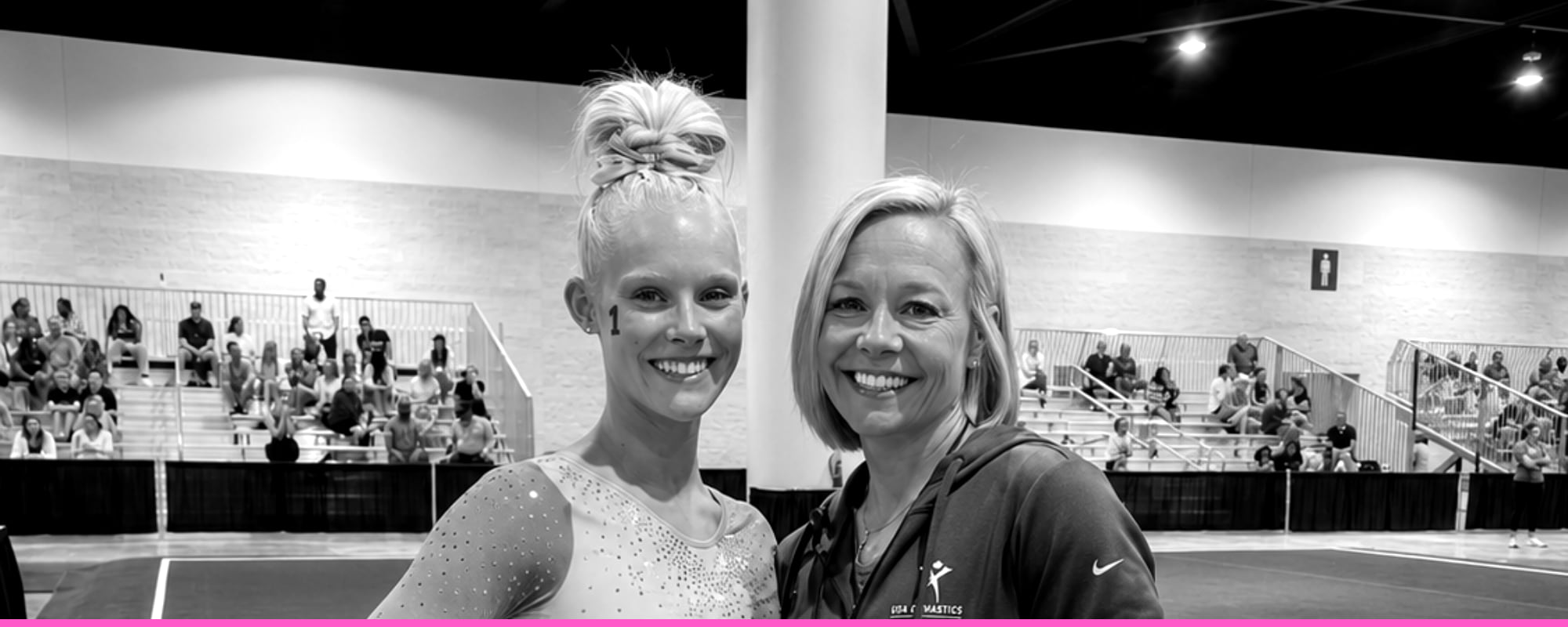
Amanda Borden: Yeah, well, first of all, I didn't coach her until she was a level eight. for a lot of reasons. We had great coaches and you know, I was coaching nines and tens and you know, I didn't feel the need to, you know, come down and coach level four. and I really enjoyed being in the stands watching her. that was definitely, you know, I I love that for all three of my kids. My boys are not gymnasts, but I love sitting in the stands and watching them too. so I didn't really I feel like get super involved till about level eight. And I mostly stayed at bars until like level nine and ten. And then I I worked in with her group at Bars and Beam, which are the two most challenging in my opinion. mentally and emotionally. I always said from the beginning, there's nothing she'll ever accomplish me accomplish as a gymnast that's more important to me than our relationship. So I I hope that, you know, she's felt that way. I hope that, you know, she shares these, you know, fun stories too. But and I think for the most part, that was really easy to balance. I had great coaches. If anything got sticky, she was so frustrated that she wasn't coachable by me, or I saw her attitude going maybe in a direction that I felt like, you know, I don't I don't wanna have to correct the gymnastics and her attitude and then take it all home, right? Like, I would just get our other coaches involved and they were amazing. I think she and I related a lot to many things. I think the biggest thing that I noticed that was different is she thrived with a coach that could really go, you know, a little bit more aggressive. Like, nope, you can do this. We're gonna do it right now. Get back there. We're we're do throwing the skill. where I was a little bit more, and this would be a funny question to ask Mary Lee, but I needed a little more of a hug, and you can do it. And I'm gonna be right there with you. and and so through time, that's my style of coaching, as I'm more nurturing like that. She'd be like, Mom, you're too nice. You're too positive, you know. and so I found that interesting. but I think overall, you know. I think she was a very strong willed, strong minded child from birth. And I think she was always amazing at hearing what I had to say, but I think a lot of it for me was I can share my knowledge and share what I know can work, but she will always want to kind of find her way of figuring. And sometimes that meant me completely butting out. And I think for coaches that's hard. I think that for moms that's hard. but it it was easy for me because I had other coaches that could that could jump in.
Gina Pongetti: it's very interesting to watch some of the athletes from 30 years ago to now and our current athletes who are who's Parents are involved, right? I mean, Simone's mom owns the gym and is involved, not from a coaching perspective, but from the business perspective. And of course, Jade's dad and you know, Artemov's dad. And I there's from the men's and the and the women's side, there are so many of these. And that's constantly a struggle to creating a very good human, above good athlete is being able to say, Mom first. achieving athlete second. And I think Kennedy appreciates that.
Amanda Borden: Ha ha.
Gina Pongetti: let's talk a little bit about something that is that was new for you in the recruiting process, not new because obviously you have athletes at your gym that are doing it, but as the on the mom side of things, what surprised you most? What was the most challenging for you in the process? And how was the experience for you?
Amanda Borden: Yeah. I think I obviously I knew a lot about recruiting with all these other athletes that I've been in. And then prior to that, it was when I got recruited, right? Like, I think when it came to being the mom, I really tried to stay out of a lot of the coaching piece of that. Like we have another coach that does all the recruiting. And so I if I had questions or I felt like You know, hey, Kennedy has questions about this school or that school. I tried to let that go through our other coach. for a variety of reasons. number one, the biggest one I felt like was I wanted her to form her own opinions about universities, the coaches, the team, the program, whatever she was perceiving of this process. Because I think when you've been in this sport for forty years. I mean, I've been in this sport for over forty years. I have a lot of opinions and they may not all be right. And and I think Yeah.
Gina Pongetti: And some of the people have been around since we were athletes are now still coaching and doing everything. Yeah. Yep. Yep.
Amanda Borden: Yeah. And what my opinions maybe have formed when I was nineteen, right? Like, and so I just really tried to not say too much. I talked to my husband about things like, this is what I think, this is what I think she's gonna like or not like. And what really amazed me is she looked at a lot of schools that I actually looked at, you know, when I was 30 years ago. And
Gina Pongetti: Yeah.
Amanda Borden: Her takeaways, even if it was different staff, was very similar to mine. And I'm like, see, I tell you, we're a lot alike, even though like I'm trying to you know, let her navigate it. But so I think all of that was fun. I thought it was an awesome experience for her and for us as parents. I would also say it was overwhelming. I think, you know, I'd I'm not here to brag about her, but I feel like what I knew I was confident about for her was she's very well spoken. She is a great leader for her team. So I felt very good about, you know, she's gonna have these adult conversations with all these adults. I mean, has she ever talked to any adults but like her teachers, the coaches, and like her parents? And she handled that process amazing, you know, like she wasn't nervous about you know, the zooms with all the coaches and the phone calls and so I had I felt like I knew that about her, but to watch her thrive in that I thought was great. and then I think that the I mean I didn't really have any surprises. I would say the life of these college coaches is so it's gotta be so exhausting. They work and do so many incredible things to build relationships and share the knowledge about their schools and I admired that. I was very impressed at you know, all the things that they do to make sure that, you know, the athletes most importantly, but us parents too, we're getting all the information because it is really the first biggest decision, you know, your kid makes when when they're approaching that point of their life. And I think ultimately like anything, any decision that I feel like we've guided her on and all of you know, our personal children. And I would do the same thing for for my gymnast is before you even do any of these calls, like what is most important to you? So that when we say, Well, here's why you like this school, does it answer the the why you originally started with? And right away she was you know, looking for things she had grown up with here, culture, positivity. She's like, she's very competitive. My first and my thirdborn love to win. So I know she wants to be on a team that feels that same way, but she wants to do it because she loves it and, you know, finds that fun and joy in it. And so that was really important to her. and then the relationships, like the coach, the coach relationship and the team relationship. And so I felt like those are really good parameters to be making her decisions. And so that really gave us as parents confidence and like, you'll know, you're gonna know. You're gonna know by the conversations and asking questions that are meaningful to you. And you're gonna know when you go on these visits because you're going to be able to see do these things look like what you talked about prior to knowing any of the inside scoop?
Gina Pongetti: Sure. Do they like their teammates? do they feel supported in decision making, which is much bigger than how does lineup work and how do you feel when you travel? I mean, it it really is what's the life part of the work life aspect of the school feel like? so go back now, you know, 10, 10 years, 15 years. What would you tell a parent who has a 10-year-old kid who's a pretty rockin' athlete and they may look like they have it all? The kid is happy, they love gymnastics, they can't stop cartwheeling on the sides even before class. Parents are zealous about them doing what they need to do, what would your best advice be for them?
Amanda Borden: You know, I I always say I was talking to my husband, like I don't know, you know, my my boys are gonna be navigating, you know, my I have a sophomore in high school. So now we're gonna navigate that process. And I'm not saying a college athlete, I'm saying like approaching college. So I think it'll be interesting to see if it feels the same or because Kenna was in the sport I knew. but I think ultimately what we felt as parents that I would encourage is to walk alongside your kids because there's nobody that loves them more, but start teaching them how to think about what they want and what that might take. Because I think one thing I'm noticing with kids I coach is they have a hard time thinking for themselves in a in a way that says like This is where I want to go. This is where what I think I need to do to get there. Or the I need help. I who do I even ask? And so just that whole thought process of, and again, I I it goes back to the the word empowerment, you know. I don't think Kennedy ever had a one path track. I think at one point she wanted to be an elite gymnast and, you know, maybe she thought about going to the Olympics and then, you know, changed that and You know, I think eventually it was, you know, landed on, you know, if there's a college opportunity, but she had no idea we're in the country. She was always very like fluid in what this plan looked like. But we always, you know, had that open conversation about it. Like, okay, well, if you really are interested in these type of schools, you know,
Gina Pongetti: Mm-hmm.
Amanda Borden: they they seem to be recruiting, you know, level tens and elites. And okay, well, what does that look like? Like what kind of skill sets do you need on these levels? or at these levels and like where are you at? And you know, do you feel like you know how to get there? Do you need to talk to your coach about it? Like, let's create a plan. And so we also do I call it Empower Hour. We do that every week here at our gym with our upper levels. we've zoomed with mental performance coaches. We've done books, we've done lessons. I lead a lot of it because I'm very passionate about it. But one thing that we did that I still do with our kids is we talked about like their telescope goals and their microscope goals. And then we basically create what I consider like a ladder goal because that's where I I noticed kids were having trouble. And you know, their telescope literally could be December for competition or it could be 10 years from now. Like they think anything past like today is long term. But
Gina Pongetti: Right. It's long term. Yeah.
Amanda Borden: Essentially what we're
Gina Pongetti: Yeah, but if you have a if you have a goal of six years from now to be an elite and you're not finishing your lunges properly, we are at level one out of a thousand that we're not gonna get there. So
Amanda Borden: Right. Right. Yeah. But but we were we were noticing kids were really struggling with, okay, even if my long term is three months away, what's my next step today? And so we started really like breaking that down a little differently. So okay, you have a Yurchenko pike. You need a Yurchenko full or better. That's what you know, and there's other vault options now. I'm just using that. And okay, so the next vault then is a layout, right? And so what do we need to do to to get to the layout? And what can you do today? And so we called these little baby steps. So we had like ladder check-ins, like were more like monthly check-ins, and then we had like the daily baby steps. Like, okay, you need to fix your power. Well, did we fix the run? Because that's something you can do today as a level eight. You know,
Gina Pongetti: Right.
Amanda Borden: you can't do the your shank of one and a half today, but
Gina Pongetti: Yeah.
Amanda Borden: you can work on your run, which does include your lunges and your power skips or your hops or and so it's like helping kids break down their goals a little bit more realistic because I feel like we have a lot of kids that have big goals and big dreams, but putting that into productive actions right now is what I'm noticing they're struggling with.
Gina Pongetti: We it's we find that at the office as well from a wellness performance, you know, perspective. I don't, as you know, I don't just treat injuries. We also do programming for gyms and and strength conditioning assessments, etc. You can't do a switch ring that's really good if you don't do your splits. if you can't do regular splits and you can't do over splits and then you can't do an arch in splits and can't bend your knee. So me teaching you a switch ring that is to the quality that it needs to be on beam or floor when two years ago you didn't have your your really good one eighty plus switch, you know. I mean, there's all these steps and the kids go, but I really wanna do that. And I'm like, Well, you really
Amanda Borden: Mm-hmm.
Gina Pongetti: had to kind of want to do that two to three years ago. You wanna start doing Tikachevs, you better have a really good back extension roll and a really good free hip and a really good, you know, there's just
Amanda Borden: Yeah, yeah.
Gina Pongetti: or Or a good arch in your back. I mean, there's so many different leadups. So, whatever you want to learn, whether it's from a coaching perspective or a physicality perspective, you have to do the steps to get there. I think that I think that that's a good life skill to teach them too. there there's a work ethic. If you don't want to do X plus one, then you might be mediocre and that's okay. Or you might not get to your goals. But if you want to do something, you have to learn the the ladders. Even just with an ACL
Amanda Borden: Yeah.
Gina Pongetti: rehab, Amanda or Achilles. Like, I mean, we like Well, everyone always talks about you you can't just start running. You have to jump first and then you have to
Amanda Borden: Yeah.
Gina Pongetti: be confident and then you have to jump on soft surface. And like we talked about earlier with the physicians that we work with, that you you have to have progress. And so these protocols that come out, same as a goal for for college, is don't tell me at 12 weeks you're going to be running. You only get to run if you have established this, this, and this and your hip control and your alignment. So I'm happy to give you a list. But the way that you do it is amazing in that you're asking them to think about what that list looks like. So instead of me telling you that you need these things and you following them just like with your head down, you're actually thinking to yourself, hmm, I think it'd be fun to learn, you know, a fallout on bars,
Amanda Borden: Yeah.
Gina Pongetti: but I'd never twisted before in the middle of a double. Well, we should probably start that. So I think that's great.
Amanda Borden: Yeah. Well in in in one way you just made me think. one way I even do that, obviously we do this like lesson here at the gym, so they're sitting there, but you know, yes, I have, you know, tens ten things that could get you to getting the Yurchenko layout or the Takatcha, but I want them to invest in the process. I want them to think about the process. And then I tell them all the time, part of the process is if you don't have 10 steps to write in there that you ask, ask somebody who can help you. Because
Gina Pongetti: Yes. Right. Right.
Amanda Borden: I probably have a hundred things I could tell you to try to, you know, give you
Gina Pongetti: Right.
Amanda Borden: a baby step chance. But the point is to not just do the my checklist. The point is helping them learn how to, you know, create a process to help them move forward because ultimately
Gina Pongetti: Of course.
Amanda Borden: it's that that fundamental. It doesn't matter what you're moving forward towards. It's create
Gina Pongetti: Yes.
Amanda Borden: it and actually do it.
Gina Pongetti: Yep. And that's the hard work where you said nothing you can hope and you can pray and you can wish and you can watch. You can attend every single practice, but attending versus working hard, just like in rehab, just like in in getting mentally strong, physically strong, you have to put the work in. And that can be done with kindness and empowerment, which I hope our generation is instilling on so many people. Amanda, it has we are coming to the end of our amazing chat. my final question for you, which would be something maybe that's fun that you can remember. What was the best food that you ate at the Olympics in the do you remember?
Amanda Borden: we we did we had like personal chefs. We stayed at a fraternity house
Gina Pongetti: Yeah. I know.
Amanda Borden: on Emory University. And I mean the best part about the food was it was, I mean, I ate huge plates. It was just amazing. And it was all fresh. Yeah. yeah. So it was not a typical cafeteria.
Gina Pongetti: Yeah. Of of food made for you guys. I know. Is it awesome? I love it. Well, it was not a typical cafe, but that's but that's what you guys needed and what a cool experience. So I am excited obviously to to catch up on everything 30 year at Nationals Can't wait to see you. thank you. What I love so much about this conversation is that you never stopped loving the sport. And I think until the day you die, even if you are selling the gym or doing whatever 30 years from now, you will always be such a champion. You turn that into a gym where kids can love it too, and you're instilling that in our next generation. So where exactly are all of your locations with your gyms and what do you want to tell all the people? that are watching this about how to find you, especially if they live close and have their daughters touched by the gold metal magic.
Amanda Borden: thank you. Well, we're in the Phoenix area. We have two different gyms. One, our original is in Tempe. And then we have one in Chandler also. and we run our preschool and recreational programs at both. And then most of our competitive levels are at our Chandler location. but we have, you know, our website, just goldmetal gym dot com. And or yeah, find us, you know, on on Google Maps. We do. We do. Thank goodness.
Gina Pongetti: And they have air conditioning at both locations for the 120 degrees it's gonna be. Well, everyone, thank you so much for listening. That's our show. this sport sure does ask a lot of us and it gives back more than people will ever realize to the point where the show is helping athletes stay healthy enough and happy enough for the whole run. I would say one of my best memories and things that I take from it is the friendships that I've built out of the sport. Because all of us know how hard it is to be in this, whether it's athletic participation, coaching, choreography, or even leading our our US national team. So that is near and dear to my heart. New episodes of the MedGym Post Podcast are coming out every other week. Every episode, the show notes and our practitioner directory are on my website, medgym.net. Follow the show wherever you are listening. And if this was useful, send it to a coach. or a parent who might need it. Remember, we are always available for consults, treatment, and programming at your gyms, either one-on-one or for your gym as a whole. I'm Gina Pongetti Angeletti. Take care of the athlete, not just the routine. Prevent, treat, and perform. And we'll see you next time. Thanks, Amanda.
Amanda Borden: Thank you.