Transcript
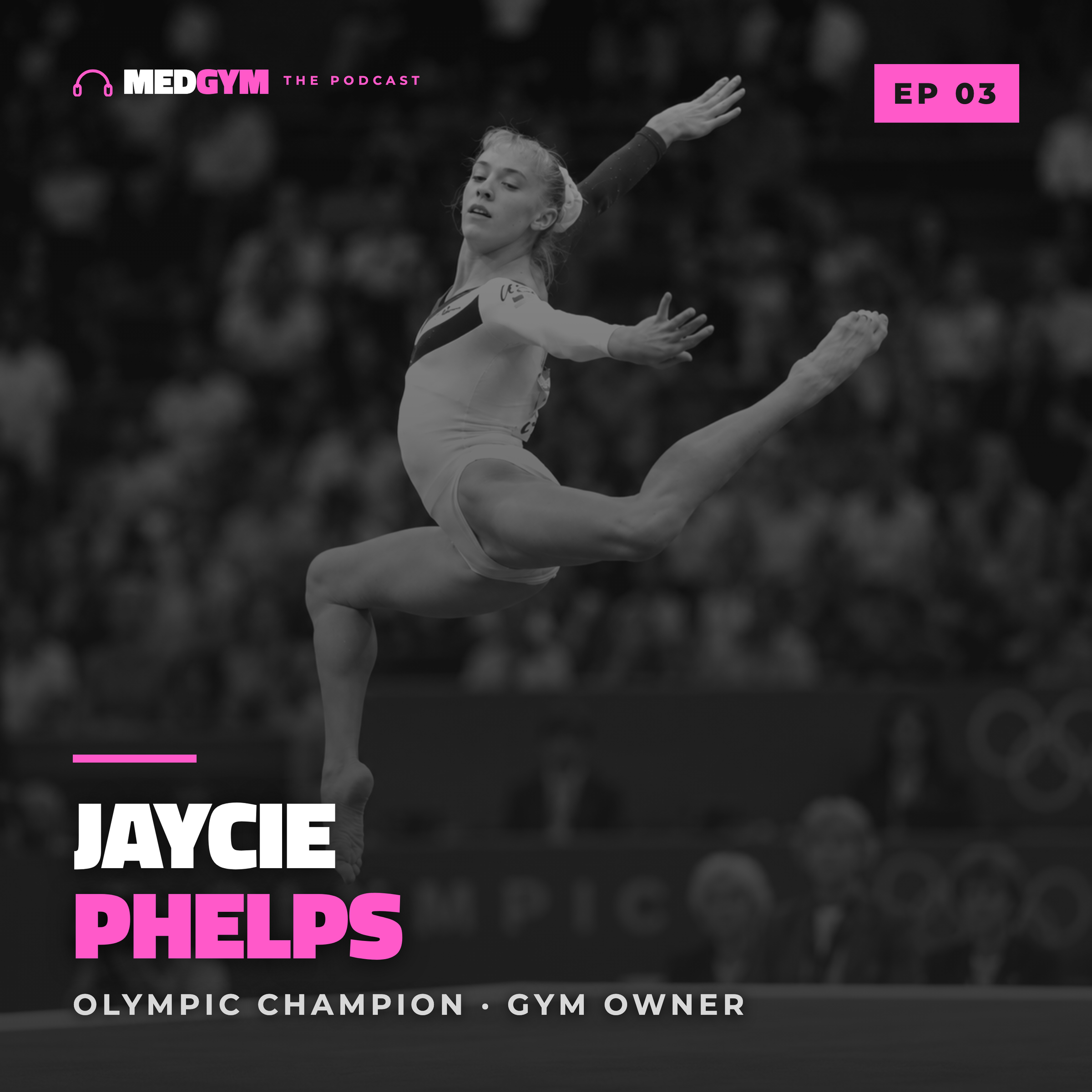
Gina Pongetti: Welcome to the MedGym Podcast. I'm Gina Pongetti Angeletti, physical therapist, and someone who has spent a career in the gap between what an athlete's body can do and what it's being asked to do. The show is about health in the sport across three pillars: mental, physical, and training. If you heard our conversation with Amanda Borden, you've already met one member of the Mag 7. Today you meet another. And these two didn't just win a gold medal together. They grew up in the same gym in Cincinnati with the same coach. Doing the same assignments on the same day. Jaycie Phelps was a part of that 1996 team in Atlanta. Today she runs the JPAC. Jaycie Phelps Athletics Center in Greenfield, Indiana, coaching the next group coming up. I want to talk about all of it: the team, what the sport asked of her body along the way, what she does differently now, and why she decided to start a gym. Jaycie, most importantly, thanks for being my friend and I'm excited to have you on this podcast. Welcome to the MedGym Podcast.
Jaycie Phelps: Of course. Thank you so much. I'm really excited about it. Excited to be here and
Gina Pongetti: Yay.
Jaycie Phelps: yeah.
Gina Pongetti: I love it. So we are without further ado in the timeline to this, we are at 30 years out. Can you believe it? And does it seem like we can be that old, first of all?
Jaycie Phelps: No, I think sometimes like how am I even thirty years old, let alone it's a thirty year anniversary. but
Gina Pongetti: Yeah.
Jaycie Phelps: you know, sometimes it feels like it was thirty years ago or a different lifetime and then other moments it feels like it was just yesterday. when you're reliving, you know, there were so many posts on our thirty year anniversary.
Gina Pongetti: Yeah.
Jaycie Phelps: and it was just fun to watch the videos and relive those moments and remember the memories, you know, outside of even the gymnastics part of it. So
Gina Pongetti: Yeah, I think the interesting part with you coaching is that you're seeing kids that didn't get into gymnastics because they watched you particularly, because it wasn't live,
Jaycie Phelps: Right.
Gina Pongetti: you know, these kids are seven, eight years old, but their parents were sitting in the stands or potentially at home, always wanting when they grew up to give their kids a chance to be in the sport, which I think is is super. So tell us just a minute like what your biggest summary is of what got you from being an athlete to wanting to start your own gym. Let's just go with your coaching side first.
Jaycie Phelps: It's pretty funny because when I when I was at the ending my gymnastics career as an athlete, I didn't think that I wanted to coach. I thought I would want to do something outside of gymnastics altogether. I think when you spend so many hours in the gym and it's so intense for so long, sometimes you get to the end of that and it's just that, what do I do next? and trying to figure out, you know, who am I post the athlete. and You get away from it for a little bit and then I think there's just something in your blood, at least for me, where gymnastics I just knew that I wanted it to always be a part of my life. and so I start I actually
Gina Pongetti: I think you make a you make a really good point 'cause some people just quit gymnastics and don't know anything else. So they just go into coaching because it's natural, instead of
Jaycie Phelps: Right.
Gina Pongetti: I love what you just said, instead of choosing to go into it, they go into it just because they don't know what else. And I think making
Jaycie Phelps: Right.
Gina Pongetti: that choice shows in, you know, in the passion that you have for the sport.
Jaycie Phelps: Yeah, definitely. And I kind of reflect back to when I was thirteen. I wanted to quit gymnastics, or at least I thought I did. I was in just kind of a slump in my career. things weren't going the way I felt like they should be going. I was kind of lost some confidence. And so I thought I wanted to quit gymnastics. I took about four weeks off from the gym and realized that you know, gymnastics was my passion. That's where I wanted to be. and I got back into it. So it's kind of the same thing, you know, sometimes you get a little bit burnt out. and sometimes it's just you take a break from it. But when it's in your blood, it's in your blood. And it's just, it's something I've always been super passionate about. And so I think getting back into the coaching, I had my third knee surgery in ninety-seven. I was still a junior in high school. And so that kind of took me out of being super competitive or being able to train at that level. and so that was when I started coaching so I could still be in the gym and it gave me something to do in the gym. and I actually just from that that was in 97. So nearly 30 years ago. just I don't know. I worked with Chris Burdett at Mary Lee's at CGA. That's where I started working with like the preteam kids. and that just developed into doing a little bit more. and then I started coaching at Desert Devils. Once I graduated high school, I moved out to Arizona. I started coaching there. then I moved to Colorado.
Gina Pongetti: Yeah.
Jaycie Phelps: I coached under Tom Forrester at Arials.
Gina Pongetti: Mm.
Jaycie Phelps: I just I worked under some very phenomenal people. I learned a ton and my love for coaching and helping kids reach their goals started to grow more and more. And then I met my now husband when I was coaching in Colorado. He was in Dallas at Metroplex and I was at Ariel's and we dated long distance for about a year and a half and then I ended up moving to Dallas. And we coached together there and we coached about a year and a half together in Dallas. And we both decided, you know, we were gonna get married and do that. And you know, if we were gonna be coaching that we wanted to take everything that both of us had learned together from all of these amazing people and start our own place. And at the time Greenfield, Indiana, which is where we are. It's my hometown. there wasn't as much going on in the gymnastics scene as Dallas, Texas, at that time. And so it seemed like the place to go. So that's how J C
Gina Pongetti: I love it.
Jaycie Phelps: Phelps Athletic Athletic Center got started, in two thousand ten. So
Gina Pongetti: I love it. I think it's so interesting that you talk about the mentoring that you chose to have. Your very first mentor in life was Mary Lee. And as a coach to you, and a coach to so many Olympians and so many wonderful people, and a mentor to me as well, I think that your first example in life as
Jaycie Phelps: Mm-hmm.
Gina Pongetti: a personal coach was someone who's always open to learn. from other people as well. And that set the standard for you when you came into coaching that you wanted to do that. Now that we've talked about what got you to coaching, let's go back to Mary Lee and let's talk about your first coach and your experience at Cincinnati. Very unique in that you were side by side with Amanda and there are so few people that get to actually train next to someone who's also pushing them.
Jaycie Phelps: Yes. I do want to give a shout out to I had a few coaches prior to Mary Lee that, you know, gave me my love for gymnastics, and taught me a lot. And when I moved to Cincinnati, that's where I was at a place in my career where I was my confidence was low and I wasn't sure. what I wanted to do. So I was in a pretty vulnerable state. And I moved to or I didn't move there. I actually went to try out for a week at CGA and that was the moment I realized that I didn't want to be done with gymnastics. I knew there was a lot more in me and there was just something within even that first week with Mary Lee, her belief in me and teaching me even to believe in myself in that first week of training and the corrections that I got and her leadership and the positivity. and alongside Amanda too. even just like I said, that short week, I realized okay, this is what I want to be doing. and I just feel
Gina Pongetti: Did it help to know that you had somebody with you that was at your level and that you weren't going to a gym where you would be at the top by yourself as y there was somebody else next to you to push you? Yeah.
Jaycie Phelps: A hundred percent. Amanda and I, I mean, we were very different. I was a few years younger than Amanda. She was older, she was more experienced. I think I brought a little bit more of like the risk taker, let's do it. sort of, I don't know, puppied like new to everything. and it was just it's a w it was a really good balance for both of us. we leaned on each other a ton. And because we were able to do that, I look at, you know, people in scenarios where they trained by themselves and at how difficult that must have been. but Amanda and Mary Lee and myself just had something special.
Gina Pongetti: That's great.
Jaycie Phelps: and yeah, like you said, a mentor from, you know, a young teenage girl, that I mean, I learned so much about myself and hard work and dedication and goal setting and time management and all the life skills. I can't think of anything better to learn from. And I do give Mary Lee all the credit for basically turning my career around and resetting me into where I am today. So
Gina Pongetti: I love it. if we compare that, I know that you had mentioned how hard it must be to be at the top of the roost at a gym when you're training by yourself. Now you
Jaycie Phelps: Mm-hmm.
Gina Pongetti: go to Simone's gym and to Woga and to the gyms where there are 15, 18 people elites training together. That's also a whole different situation where there are so many up and comers. And I know that there were more than just obviously you and Amanda at CGA, but
Jaycie Phelps: Right.
Gina Pongetti: what the culture at CGA was always that they're training for the next generation and that that excellence
Jaycie Phelps: Mm-hmm.
Gina Pongetti: was always something to look up to. How does that play into how you coach today at your gym?
Jaycie Phelps: you know, we set a high standard for everybody in the building and I think it's really cool our atmosphere. if you come in, it's I mean, it's pretty loud, everybody's cheering for everybody and it's just you just feel you know, when somebody's trying to get a new skill and maybe they, you know, a new release move and they've tried ten times, fifteen times, and it's like just that one more, and then the whole gym gets behind them and is cheering for them. But it trickles down, you know, it's our our top groups that, you know, the expectation is set. And then the little kids watch the big girls and they want to be like the big girls. And we always talk about, you know, how important that role is in those leadership positions, even if you don't necessarily want that you're in that position because you guys are the big girls and you are training at that highest level and you know, constantly trying to set. a good example. And now I'm mom of one of the little girls. So it's really cool too because I get her perspective coming home from practice, you know, and a lot of the talk is about the big girls. And so it's a it's a really
Gina Pongetti: Yeah. I I love it.
Jaycie Phelps: cool dynamic now because it's not just athlete and coach. It's also mom. So I don't know. It's it's really cool.
Gina Pongetti: Yeah, Amanda talked about the the difference in the hats you wear with having Kennedy
Jaycie Phelps: Yeah.
Gina Pongetti: in the gym and obviously building both of you such a a a a dynasty at your at your gyms of where you have been, but the athletes that you're bringing as well. And sometimes just letting the coaches do the coaching and being mom. And
Jaycie Phelps: Mm-hmm. Mm-hmm.
Gina Pongetti: that's that's a really hard hat to wear. So kudos to you. And a little bit behind where Amanda is in dynamics. I know we're so.
Jaycie Phelps: I'm just getting started though. Yeah. Yeah.
Gina Pongetti: Let's go back to training at CGA and obviously
Jaycie Phelps: Mm-hmm.
Gina Pongetti: two athletes, two different bodies, same coach, similar assignments. How did you both from a everything flexibility, strength, power, fatigue, numbers, handle training for the same events, the same pace, the same goals, different assignments, different weights of assignments, different numbers? Tell me a little bit about what some of the differences were and how coaches or how Mary Lee specifically handled that.
Jaycie Phelps: I think probably the biggest difference was just knowing our age difference and experience difference. You know, Amanda had been to through 92 Olympic trials and all of that. So she had that experience. I literally came in as a junior elite who finished 24th out of 25th at championships. No experience at all.
Gina Pongetti: Nice.
Jaycie Phelps: and so I needed more. I needed the reps. And I was just green and fresh to all of it, you know. So for me, I think it was just, you know, Mary Lee said go and I went. but also I just like I came in with zero confidence. And so buying into the program and doing the progressions and the reps and the whole program, you know, from the warm-up to our numbers to our flexibility to the conditioning program. I just I was super bought into it. And after one year I finished I was like I said coming into a 24th out of 25 at championships in ninety-three to my first year as a senior. my first year with Mary Lee and I finished sixth at championships. And then I ended up Qualifying to my first world trials. I made
Gina Pongetti: Child.
Jaycie Phelps: the world championship team. so that all happened in one year. and I think it was in that one year, looking back at '94, which was two years prior to the Olympics, that's when I realized, okay, this dream of making an Olympic team is actually a reality. And so think
Gina Pongetti: Trusting the process for you was
Jaycie Phelps: Trust yeah, for me it was definitely trusting the process. And I think it was very quickly earned because you know, I bought in and everything that we were working on and trying to accomplish, we were doing that. So yeah, I mean trusting the process and yeah.
Gina Pongetti: Yeah. flipping, I feel like t today we're in like a flipping mood.
Jaycie Phelps: Yeah.
Gina Pongetti: flipping it back now to how you're coaching with Dave. And obviously no athlete is the same and no athlete
Jaycie Phelps: Mm.
Gina Pongetti: can handle the same amount of reps. I talk a lot with my patients about the concept of overtraining and what might be overtraining to someone who's used to doing five vaults shouldn't do 15, but someone who's used to doing 15 can do 15. So How do you handle that in the course of a gym when you have an athlete that might be a rep kid, like you said, or
Jaycie Phelps: Mm-hmm.
Gina Pongetti: that might be a, okay, I did three, I'm good, I'm done, you know, where are we? How do you handle that with your coaching?
Jaycie Phelps: I think honestly it's just you you have to build that athlete coach relationship. and I feel like I've got a very open relationship with my athletes. And I think it's super important to be able to have that communication for that very reason. you know, if you know the kids and you know their personalities and you pay attention to the little things, you know, there's signs there because every athlete at that level wants to go, you know, they want to keep going, they want to put it. all their effort into it and sometimes to a fault, because they're trying to accomplish things. And I think a lot of it is you just you've gotta be able to read each individual athlete. but I also think that's very important because some kids do need the reps. Like we definitely have had the rep kids and then we definitely have those where it's like, all right, we hit three good ones. That's, you know, it's enough for today. but I think it's I think the The communication between athlete and coach, I think, is super important. And then obviously
Gina Pongetti: I love it.
Jaycie Phelps: you have to build that trust with the athletes to feel like they can open up and be honest. Yeah.
Gina Pongetti: And be honest with you. Sure.
Jaycie Phelps: And that's a really that's a really hard barrier to break. Yeah.
Gina Pongetti: Yeah. Well, but the importance of that barrier, mental health, physical health is so is incredible because if
Jaycie Phelps: Mm-hmm.
Gina Pongetti: two months later someone says to you, Jace, I and I my leg has been hurting for two months. Well, why didn't you tell me? Well, I don't
Jaycie Phelps: Yeah. Yes.
Gina Pongetti: know, but you kept saying that I needed to do two more routines. Well, yes, because I assumed that you had no pain, still felt strong.
Jaycie Phelps: Right.
Gina Pongetti: And if you don't tell me those things, you we can't help you. So I think that that's incredibly important. Speaking of being honest and open with your coaches,
Jaycie Phelps: Mm-hmm.
Gina Pongetti: I'm sure you and Mary Lee had a bit of a conversation before you were the leadoff person at the finals. And
Jaycie Phelps: Yeah.
Gina Pongetti: with open communication about being nervous but still wanting to make sure that she knew that you were ready. How did you balance both sides of that? I've got this, but holy, holy cow, I'm first. I'm leading.
Jaycie Phelps: I'll tell you what, like I was a very consistent athlete. Like, I mean, I was pretty much like autopilot. when I went into a compet any competition, you know, in our warm-up time I would hit at least two routines, maybe a third routine. and then I always hit a routine in the 30 second touch. And so that was kind of my natural was I would I would hit three routines before I saluted the judge. And so I just I felt really good about that. And I was a rep kid. You know, we were in a row assignments. I was 10 in a row beam routines, six in a row bar routines. you know, so three is like half. So it's nothing at that point and at that
Gina Pongetti: Right.
Jaycie Phelps: stage. that day, for some reason I could not make anything. I'm sure it probably had something to do with nerves and just being a little bit ahead of myself and fast. But typically I could reel myself back in. but I just it was turn after turn and I could not I couldn't figure it out. I didn't make a single routine in the timed warm-up. And so next we line up, you know, and I'm freaking out a little bit, but I also was pretty good at handling my nerves. I knew that I had my 30-second touch, so I knew that I got another opportunity to Hit that routine before I saluted the judge. I mean, everybody was a little bit frantic before we marched out that day. It was it was a lot, 40,000 people before we even marched out the curtains. they couldn't even see us, or a a small little section could see us in USA, USA.
Gina Pongetti: Yeah.
Jaycie Phelps: and for me, I think my routine before going out on the competition floor was just to visualize my routine. I would try to get my breathing in control. so breathing, visualizing, and then I would always say, I can do all things through Christ these rings and that was my before I saluted, that was my verse and my go-to. And I would take a deep breath and basically leave it there. so yeah, we march out and 30-second touch, I didn't hit my routine. So mind you, I'm used to hitting three full routines and I'm feeling pretty good about, you know, my warm-up. And at this point, I'm first up. I'm leading off the night. We're at the Olympic Games. There's 40,000 people chanting USA. I haven't hit a routine yet, and here we go. so yeah, at that point I just Amanda's like. You got this, you can do it. And she's talking me off the ledge. And I visualized a routine, took my deep breath.
Gina Pongetti: What were Mary Lee's words for you?
Jaycie Phelps: Mary Lee just saying She always, you know, take a deep breath and do what you know how to do. You know, you're prepared, basically trust the process. You know, this is what you're ready to do. So her reassurance.
Gina Pongetti: And I I knowing Mary Lee for decades, I know she says that she that's one of her phrases is do what you know how to do. And that comes from the process and reps and just saying that to you must have said, Okay, I I I know I didn't do these four routines, but I know how to do this.
Jaycie Phelps: But I've done a thousand prior to that. And that's where,
Gina Pongetti: Yeah.
Jaycie Phelps: you know, we did a lot of mental training and a lot of stuff like that, four moments like that. And I had to just trust all of that, you know. I had to trust the preparation. I had to trust that I was ready, that I was I knew what I was doing, and somehow just let all of that other stuff go and focus in. And I saluted and took that breath and Best routine of my life. so
Gina Pongetti: Absolutely.
Jaycie Phelps: it was from that moment on the momentum and the energy in that place was crazy. Yeah.
Gina Pongetti: I love it. although Amanda was team captain, obviously
Jaycie Phelps: Mm-hmm.
Gina Pongetti: your consistency was an example for others that when you work hard and when you are consistent, you can have a blip and still come out on top. So
Jaycie Phelps: Right.
Gina Pongetti: without the title of captain, you were still an amazing leader. And I know you keep mentioning that you there was an age difference and that there was a little bit a few years. Amanda was nineteen. yep.
Jaycie Phelps: She was nineteen and I was sixteen, yeah.
Gina Pongetti: Yeah. And you were sixteen. So did you feel at all, even though and there were younger than you, that you also had a leadership role on that team?
Jaycie Phelps: I think I felt it from the standpoint that I knew I was leading off six out of eight events. and I I don't you know, looking back at it now, I'm amazed that I was able to handle that. but when you're sixteen and you're doing what you love and you're ready for it and you've trained for it, that was like those were the moments I lived for. You know, so it was like I don't know, that adrenaline and I don't know. It was just that was that was the moment we lived for.
Gina Pongetti: Think I think you and I have talked about pressure is a privilege sometimes.
Jaycie Phelps: Yes.
Gina Pongetti: and I believe that you would not have been put in a leadoff position. Let's go back. Some people think that that's a punishment. you're making me lead off. I can't believe this. It's the most stressful role. in college, often it's viewed very positively because
Jaycie Phelps: Mm-hmm.
Gina Pongetti: that you're the person that sets the tone. And I think in a big world stage, that speaks a lot to what you. earned you earned that spot because of your consistency and knowing that your percentile was pretty
Jaycie Phelps: Mm-hmm.
Gina Pongetti: good or your percentage I should say of of of hitting and consistency, you earned that. And I think that I don't know if you thought that at the time, but I think for everyone that was watching and that trained with you and that knew you knew that you were steady eddy and that there was a blip and that And that was a spot that you earned to set that confidence for the rest of the team.
Jaycie Phelps: Yeah, I think I look I look at it very differently now than I did back then. You know, back then I was just I was excited to be part of the team and I was willing to do whatever it took to contribute to the team in the best way possible. So yeah, now I look at it and it's like it's an honor that I was chosen for that spot. So
Gina Pongetti: Yeah.
Jaycie Phelps: yeah.
Gina Pongetti: I like it. I like it. talk to me a little bit about reps and sets and training. we're gonna switch gears just a bit, and
Jaycie Phelps: Mm-hmm.
Gina Pongetti: how it led you to trust the fact that you as you said, ten routines, no big deal, three competitions were a third or half the stress of a of a practice from a physical
Jaycie Phelps: Mm-hmm.
Gina Pongetti: perspective. Throw out some numbers for everybody. I have elite parents, I have athletes, I have coaches asking me all the time, do you know what's too much? How much is too much for your body? My answer is always canned in that overtraining is different for everybody. It depends on what you're
Jaycie Phelps: Yeah.
Gina Pongetti: used to. But there is a too little and there is a too much, and there's a big gap in between. Tell me
Jaycie Phelps: Right.
Gina Pongetti: what where where are you at on in in a peak of a cycle? Are we at ten full routines? Are we at two sets of five series in a row? And if you fall, it might take you fourteen series to get that in a row again. toss some numbers out for people.
Jaycie Phelps: Mm-hmm. again, I think it really is athlete based. I set my assignments with the intent of everybody trying at least to get through the numbers, right? I have fluctuated a little bit. and it's kind of depending on to like our levels, what we're trying to qualify for, where we're at in season. I typically start with you know, fall preseason, three in a row or five. so I try to put an emphasis on if we can hit in a row, we can do less numbers with a due number. I like that for motivation. So I always start with a in a row or number. they're all makes. but three in a row or five is kind of my base baseline. and then I move four in a row or six. And then by the time we're getting into championship season, that's where I start building the numbers a little bit more. five in a row, I think, is a very solid place to be. if you can hit five in a row consistently, you know, day to day, I think you're you're setting yourself up pretty good. Now I'll start with like a five in a row or seven. and then between Going into between state and regionals, the week before regionals is always my biggest week. so this is for my J O kids. and then I do a seven a row or ten day, and then I have one day where we do ten in a row. so my favorite part about that assignment is the kids don't always necessarily come in like gung ho, yay, it's ten in a row day, although we really work on trying to come in with that attitude. and I'll give them say like a Tuesday and a Thursday, one of those days will be seven in a row or ten. One of those days will be the 10 in a row day. So on Tuesday, if they're going, okay, I'm gonna go for seven in a row, they get to the seven a row, they're like, I feel good, I want to go for my 10 in a row. And so they keep going. and then if they get their 10 in a row on that day, then Thursday will be the seven in a row or 10 day. Now obviously you've got some kids that have the aches and pains or something that may not allow them to do that many reps. we always just set out with the intentions to try. and then we can make modifications as we go. but
Gina Pongetti: Which because of the build that you do all season, it's it's
Jaycie Phelps: Correct.
Gina Pongetti: it builds in the way that one more per week, it's just like a runner returning ten percent a week, et cetera. And so
Jaycie Phelps: Right.
Gina Pongetti: it seems and some people listening will probably say, my goodness, that's crazy. but when you need the consistency, not everyone does a routine in touch. I would say probably one in ten kids can flip a full routine in touch instead of doing some prep and some other some other warm-up.
Jaycie Phelps: Right.
Gina Pongetti: So they may not hit a routine in warm-ups per se. And so
Jaycie Phelps: Mm-hmm.
Gina Pongetti: you need to have that behind you for consistency.
Jaycie Phelps: Yeah. And then there's obviously other styles of assignments. That would be like a full routine assignment. And I always start with skills in a rows first before we build into the routine. So if we're in a five in a row phase on routines, then on a separate day, say Monday. Monday I typically do like a series complex and then we'll do like in a row series. So if we're on five in a row on our routine days, then I'm gonna build seven in a row on our series. So single skills, then I start building the bigger numbers. and this is over, you know, a few week period of time where we're getting used to those numbers and then we're gonna add on. So or we're adding on by single skills on inner rows before we throw it into full routine in a rows. So yeah, I've got it mapped
Gina Pongetti: Understood. And did that that
Jaycie Phelps: out.
Gina Pongetti: you said that reps obviously were, you know, a part of where you were.
Jaycie Phelps: Uh-huh.
Gina Pongetti: although when you were training, some kids might have been, I'm three, I'm done, my body hurts, etc. As you aged within the sport, and then we will transition into the two thousand the comeback, did you find
Jaycie Phelps: Mm-hmm.
Gina Pongetti: that you still liked the reps or did you switch more to quality over quantity?
Jaycie Phelps: I think the more experience I had, definitely quality over quantity. And I think that's something you learn as an athlete as you go. And that's something that we definitely try to instill in our athletes is the understanding that the more quality reps we take, the less we have to end up doing in the end, regardless. but obviously when we skills are new and routines are new, you know, it just it takes more and naturally the more successful numbers you do, the more consistent you're gonna get. And with consistency builds confidence and confidence is everything to me. Yeah.
Gina Pongetti: I love it. so you finished ninety-six confidently, obviously, winning what people train their whole lives for. What did you do for a couple of years and what made you want to train and try for 2000 again? Unfinished business or
Jaycie Phelps: So well, what most people or some people may not know is that I had a knee surgery in ninety-five prior to the Olympics. It was just a meniscus tear or cleanup. I ended up actually getting that surgery after world trials. I it happened there. I had a discoid meniscus, so it was round instead of the half moon shape. It had a tear, it flipped over and tore. And so They cleaned that out. it was three weeks was world championships, and I ended up competing at world championships on seven out of eight events. And I was a week out of surgery when we started traveling. I was walking across the beam and swinging on bars. somehow everyone had the faith in me that I would be able to pull this off. And it was something that I wanted to do. Like I said, I didn't have international experience. So In 95, to me that was really important being the year before the Olympics to get that exposure. And we weren't really sure how much I was gonna be able to come back and do. but I was doing rehab, a lot of the activities outside of the gym I wasn't able to do because I couldn't do the extra walking around and all of that stuff.
Gina Pongetti: Yeah.
Jaycie Phelps: but anyway, that was 95. Competed in ninety six, obviously the Olympics. On the post-Olympic tour, my knee gave out on me again. I did a double back dismount off beam in one of the shows and I landed and I landed fine, but I couldn't walk off the mat. Like I was in so much pain I couldn't walk off on the mat. And so I had to get it checked out then and I had bone on bone. So that's what it was just like intense bone pain. I had a very new procedure where they drilled the holes in the bone to try to form the callus didn't work. and then my third surgery was in 97. So the year after the Olympics, I was a junior in high school and I had a meniscus transplant from a cadaver. So it had never been done on a gymnast. My doctor told me I would never be able to compete. Gymnastics again, all the things. So that for me was kind of life crushing.
Gina Pongetti: Yeah. Because you weren't done after ninety six. Yeah.
Jaycie Phelps: I I was not done. I had unfinished business. In my in my mind, I was just getting started. I was two years on the scene. I had been to three world championships, ninety-four, ninety-five, and then individual in ninety-six. but really like it all came on in those two years. So I just felt like I was just getting going. But that news and that time like crushed me. And it was a full year of recovery for the transplant. I was on crutches for three months, non weight bearing. and so that's kind of what got me started into coaching a little bit was I couldn't train, but I wanted to be in the gym doing something. So that's how I got started coaching. like I said, three months non weight bearing. It was a full year before I could really run and do. Full exercise by then. I was in my senior year of high school. you know, I was still coaching and kind of doing high school things at that time and focusing on graduating. And I wanted to move to Arizona. I had lived out there for a couple of years when I was younger and loved Arizona. So I moved out there. started coaching at Desert Devils, and I coached with Jeff Eaton, and he's one of the greatest technicians I've ever worked with.
Gina Pongetti: Sure is.
Jaycie Phelps: And I was just I was inspired by, you know, what new and different cool things could I learn if I came back. And that's just kind of what inspired the whole comeback. the doctor telling me that I couldn't was one. I wasn't really settling for that. I didn't feel okay in my soul with that being the answer. So I talked to Jeff [Eaton] and I just said, What do you think about me coming back and training again? and he was all for it. And we actually sat down with my doctor that did my knee surgery, me, Jeff, and my doctor. and he mapped out she's probably got this many punches. and so it was it was a pretty well thought out comeback. And I think for me it was more about proving that I could do gymnastics. when the doctor said I couldn't, whether it was the right decision physically or not, for my mental side, I needed to prove to myself that I could do it. So I came back and competed to all around competitions and by championships, my second competition, I was getting shots in my knee and it was pretty painful. And I was like, all right, you know, now I can say I did it. I'm gonna be done on my terms and I was okay with it at that point.
Gina Pongetti: And you pushed your body per se to when your body said, We can't anymore.
Jaycie Phelps: Yeah.
Gina Pongetti: Yeah.
Jaycie Phelps: My body said we can't anymore and I was mentally okay with you know, I tried, I came back, I did the things that were supposed to be impossible and that to me was the win. so that was that story.
Gina Pongetti: Yes. Yeah. You you I love it. you were one of the first to try, obviously, to to come back and you weren't 28, 30, you know, it was just after
Jaycie Phelps: Mm-hmm.
Gina Pongetti: it you know, after 16 with Atlanta, but you look at SUNY Lee and you look at Katelyn
Jaycie Phelps: Yeah.
Gina Pongetti: Ohashi and you look at Jade, Carey and the age difference and the comeback.
Jaycie Phelps: Mm-hmm.
Gina Pongetti: What do you think has changed? now from a medical, physical, life, knowledge, everything perspective that is allowing all of these athletes to continue and and make three Olympics and make twelve year or sixteen year elite careers.
Jaycie Phelps: Mm-hmm. it's really impressive, first off.
Gina Pongetti: Yeah.
Jaycie Phelps: second, I just think there's so many more resources now. And I think everybody is learning more on how to make the body work for you. and I think surfaces are different. There's lots of training tools as well with equipment and soft landings and just the I mean integration of all of it and I don't know, it's impressive.
Gina Pongetti: Yeah. So obviously when you're coaching, you're not thinking, Dave and I are going to create an Olympian, but let's create one that goes for three Olympics. I mean, no one thinks,
Jaycie Phelps: Right.
Gina Pongetti: you know, that long term. But as a coach, you do have a little bit of of a duty to help protect their bodies. So
Jaycie Phelps: Mm-hmm.
Gina Pongetti: when you're in the gym coaching, are you doing some of the things that you just mentioned? Are you varying surfaces? Are you watching for landing positions? Obviously cycling. how are you incorporating all of that? even if it's not comeback time, it's more prevention
Jaycie Phelps: Right.
Gina Pongetti: and prep time for the athletes to not burn their bodies out. What are you doing, at JPAC to kind of help with that?
Jaycie Phelps: we definitely have a cycle between like our conditioning program and our training program and it kind of offsets through the seasons. you know, when we're doing harder landings and training in competition season, then we're doing softer, more prehab rehab style conditioning exercises. and just I mean we have a a cycle that we go through if we're doing And then it's it's vice versa, you know. so if
Gina Pongetti: Yes, right. But that takes actually having workout plans written out so that you have those so that you can give
Jaycie Phelps: Yeah.
Gina Pongetti: to people that are helping you what exactly you're doing to make coaches can't just come in and say today we're gonna do five routines, tomorrow we're gonna do
Jaycie Phelps: Right.
Gina Pongetti: plyo out of the blue, because if there isn't a plan, then there can't be that vice versa, there can't be that balance.
Jaycie Phelps: Right. Yeah, and we're we're alternating days. So we do an upper conditioning list one day and then a lower conditioning. So we're alternating upper and lower. and then through season two, like with vault and floor surfaces are a big difference. So we're either punching on rod floor, landing soft, we're punching on the real floor landing soft or we're doing everything on the hard floor and then we've got the tumble track surface as well. So we've got four different punching surfaces with a few different landing surfaces as well. So we're really, you know, trying to watch that and also between floor and vault, trying to switch up punching and landing on the two of leg events as well. And alternating that.
Gina Pongetti: I love it. Always, always preaching micro and macro cycles. And one of the things
Jaycie Phelps: Yes.
Gina Pongetti: that we always ask, and you know, if I were to ever you were to ever say, Hey, we have a kid that has an ankle injury, I'd say, give me the last six weeks of what your training has been. And we need
Jaycie Phelps: Right.
Gina Pongetti: to take a look at what you know you and Dave are doing what the where are the numbers? Is she also playing soccer and not telling anybody? Are we also,
Jaycie Phelps: Yeah.
Gina Pongetti: you know, walking around the zoo 15, you know, days in a row? So I think that that's a very I think it's very good for everybody to know that there's so much goes into coaching that is behind the scenes in planning to really create that long-term athlete, which is which is important. So in coaching
Jaycie Phelps: Right. It's
Gina Pongetti: these athletes that actually are going through what you went through, you know what it's like to be training for elite. You know what it's like to s to to say, I think I can do it, but I'm on that brink, and then to make it. What do you think that you as a coach who's been through it see and catch versus other coaches who haven't been there or who maybe were level fives or sevens and what advice can you give them just because you have empathy, you have that experience with the process?
Jaycie Phelps: Right. I think, you know, when you get athletes at that level that are goal driven and aspire to do big things like that, then you're typically not gonna get the kids that, you know, are trying to get out of things for any particular reason. And I think more so at that stage in that level, they're going to they always wanna please. they're afraid to speak up, not So much because it's what you're gonna say, but it's because they don't want to stop, you know, and they don't they know too, like the process of you know, doing the numbers and building the consistency and getting the reps, you know. Anytime there's something that's nagging or bothering you, you just you kind of want to pretend like it's not there and it's not real, and then it's gonna just go away. And I think me as an athlete, I did that because I never wanted to stop. You know, but that also you've gotta look for those signs. And I think that's where that communication comes in to make sure that you don't push, you know, to the other side of overtraining versus let's be smart about this. You know, we can still do reps, maybe bring the numbers down, but doing some is better than not being able to do any or putting ourselves into like a complete shutdown phase.
Gina Pongetti: Think that that comes with the trust that they have in you, trusting the process. Same as with coaching, as with your medical provider. Don't come, don't come in and say, My legs hurt, and then think that we're going back to square one. We might go back two small steps or take
Jaycie Phelps: Right.
Gina Pongetti: one day off. It's not that you're going to say, Well, then we can't vault at Nationals. You might just say, Let's just take it easy for for a day or two. Maybe
Jaycie Phelps: Right.
Gina Pongetti: that conditioning was too much for you, or maybe coming back from mono or from being sick. Maybe your body needed a couple more days and we didn't know that now. So I think that fear in talking to coaches is definitely
Jaycie Phelps: Mm.
Gina Pongetti: battled down a little bit when there's a positive communication, knowing that you're not going
Jaycie Phelps: Hundred percent.
Gina Pongetti: to overreact to the honesty that the athlete's telling you. So that's great.
Jaycie Phelps: Yeah. Yeah, definitely. And the you know, time frame is also really important too, you know, like there's some times and season where it's okay to back down a little bit, you know. And then
Gina Pongetti: Yeah. Right.
Jaycie Phelps: there's other times where it's if we can push, this is when we need to push, you know, but again it goes back to the communication and having that trust in each other to be able to have those conversations and make the most the best decision for for that time for that athlete.
Gina Pongetti: I love it. as you are taking these athletes through the process, I'm sure you have parents asking you all the time, do you think my kid has it? Do you think that this is, should we push them to do elite Or I I know that we might be a year behind. Tell me bits of advice that you give to parents if they have a child that is potentially on the path. let's say to at least an NCAA scholarship, let alone
Jaycie Phelps: Mm-hmm.
Gina Pongetti: national team or the Olympics, and how to guide them through ten years essentially of parenting the process.
Jaycie Phelps: Yeah, it's a marathon, not a sprint. that's you know, always the biggest piece of advice is your kids' journey is different than anybody else's. So, you know, the comparison train is always there and the keeping up with, you know, the friends or the kids that were in this level together, you know, that's where, you know, everybody starts to veer off and kind of have their own journey and their own path, whether it's, you know, maybe just the interest is different or maybe there's an injury, you know, and there's a a couple of months of just rehabbing and th those are always
Gina Pongetti: Or maybe there's just a repeat level nine year and that's okay. Yeah.
Jaycie Phelps: Perfectly okay because a lot of times, and at least this is, you know, there's a lot of thought that goes into those decisions. And at the forefront for us on those decisions is what is best for the athlete? What are we we want them to be set up for success, right? Not just for this season, but for the future. So sometimes it's just a little bit of. a maturity thing. Sometimes it's experience. sometimes it's yes, we have all these skills, but we're not ready to put them in routine and compete them right now. But if we have another year to perfect these things while we build our confidence competing at this level and being successful, then we're gonna set ourselves up for the future. You know, to where if we push and we go a little bit too early, we're competing now as a level 10 and Everything is just right on the verge of being ready. Like, yes, we can do it, but we're not real consistent. And then we end up going in and fall apart, you know? And then we're just we're beating ourselves up and the confidence dwindles.
Gina Pongetti: go back to something that I go back to something you said earlier in the podcast that consistency breeds confidence. And
Jaycie Phelps: Mm-hmm.
Gina Pongetti: if you are not consistent at something, you can say you're a level 10 for a minute when you're getting, you know, eight point eight twos or falling all
Jaycie Phelps: Right.
Gina Pongetti: over the place on that standing full that you just have to do as a level 10, But that doesn't necessarily mean and that athlete is setting themselves up for not succeeding and not feeling like they can perfect the skills that they have. They're just trying
Jaycie Phelps: Mm-hmm.
Gina Pongetti: to hang on and survive. and
Jaycie Phelps: Yep. And that's not a fun spot for anybody to be in. You know, so we really we really look at that. and the the confidence is a big it's a big factor. I think it I think confidence is everything. You know, you get a kid with swagger and confidence that goes in, they're unstoppable. You've got a little bit of doubt in yourself if that's in your mind at all, especially in a high pressure situation, then you're gonna fold, you know. so you just you wanna be sure that you are set up and ready to go for that. And yeah.
Gina Pongetti: I love it. In addition to being set up and ready to go confidence and skills, I know that you have a booming program at your gym with sports science and with incorporating macrocycles and conditioning and everything else. And it is fun to develop something like that so that you can actually see the progress that the athletes are making over the years when considering to move someone from level to level. How much do you consider physical abilities, their body strength and endurance versus just skills? And I think this is really important for the coaches listening, the athletes listening themselves also,
Jaycie Phelps: Uh-huh. Right.
Gina Pongetti: and the parents to understand that that has to be we can't go level to level. I think we'll get stronger, let's just chuck it and
Jaycie Phelps: Right.
Gina Pongetti: try it. So how do you incorporate that and how what kind of weight do you put on that, I guess, at the gym?
Jaycie Phelps: we do our upper body conditioning program is physical abilities. So we do all the physical abilities exercises, the kids are tested once a month, at all levels. And so we put a big importance on that because let's be honest, the skills as the levels increase do not get easier the weaker you are. it actually becomes much harder and much more dangerous. so it's super important that the body can handle what we're asking it to do. and that's what the physical abilities exercises are teaching our body and getting it ready to do. So it's super important in our program. we do test them and when we're
Gina Pongetti: I'm in awe of the gyms that say I'm a level eight and I still can't do a press handstand. I had it and I lost it. Then you're not, then you shouldn't be
Jaycie Phelps: Yeah. Yeah.
Gina Pongetti: a level eight. Or, you know, I haven't I haven't been able to do a standing back tuck yet. well, I don't where did it go? Yeah,
Jaycie Phelps: Yeah.
Gina Pongetti: you have to be able to have the base to do, to add on and to do the skills.
Jaycie Phelps: Not just to be able to do the skills, but do them successfully and to do them physically without, you know, harming your body or putting more risk on getting injured. So and especially as the difficulty increases, your body's gotta be able to handle that stuff. And so yeah, a lot of times, you know, that conversation is hard because it's like, well, you know, we've done this skill on the pit bar and We did verifications and we showed that. And it was like, yes, we did, but now we have to the next step is it has to be put in sequence on the real bar on a competition set. And then after it's put in sequence, then we have to be able to do a routine, a full routine with all the skills together. And then after we do a full routine, then we have to be able to consistently build the numbers on now. I can make three in a row and now I'm making five in a practice. And you get 40 minutes in your rotation. So it's You know, it's that whole process of it's not just I can do the skill. It's where are we with, you know, the quality in which we can do the skill and the endurance for being able to do it in a competition scenario successfully.
Gina Pongetti: That brings me back to your physical abilities. I know that obviously at the gym you guys are big on body alignment and learning. I
Jaycie Phelps: Mm-hmm.
Gina Pongetti: mean, a handstand is a handstand and the handstand you do in level six is going to be the one you do in level ten. And if you get away with it not being vertical and aligned, and obviously we work a lot with the athletes on on alignment and post body posture, et cetera, you should be able to teach a blind change pretty easy. if you have a vertical handstand and if your core and shoulders are ready for it. And if you aren't and if you're a big whirly gig, we're gonna have problems. The problem isn't yelling at them to do it better. The problem is go back to the fact that they don't have the building blocks.
Jaycie Phelps: putting them in the right positions
Gina Pongetti: And the coaches just, you know, sometimes aren't putting them in those positions. Chucking skills is fun, kind of. Open gyms are fun, kind of, and right, progressing. Yeah, but they're fun. Progressing
Jaycie Phelps: Kind of. But they're fun, right?
Gina Pongetti: is is kind of where to go. So a l a couple of fun things for the audience who's listening just to hear from you. Who was the most amazing person that you met at n at the ninety six Olympics that was not that had nothing to do with gymnastics?
Jaycie Phelps: the most amazing person. I met a
Gina Pongetti: Or an interesting conversation or anything.
Jaycie Phelps: Yeah, I met a lot of really cool people. a lot of really cool experiences came out of it. the basketball team we shared the arena with, so we had a day where we got to hang out with all of them and Shaq was there and Reggie Miller, who is an Indiana guy. So
Gina Pongetti: Yeah. Yeah.
Jaycie Phelps: all those guys, that was really cool because they were so tall. I'll never forget Shaq holding Dominique Moceanu
Gina Pongetti: Yeah.
Jaycie Phelps: over his head and she was like this big. So that was a really cool interaction and experience. going to the White House and just being able to meet the president and be in the White House and experience that was really cool. my honestly, my favorite experience post Olympics was the post Olympic tour, where the men's team and the women's team traveled together. We did 85 cities, we sold out arenas. we felt like rock stars for a good year and a half. And I think we built our relationship so much closer through that experience that to this day, like looking back on that whole experience, that was one of my favorite things that came out of it. So
Gina Pongetti: Yeah. I think you also that was something very different. V like college gymnastics at this point in time gives people that ability with the hoopla and the TV and ESPN. And back in ninety-six, even through two thousand, college was still fun and people still watched, but it wasn't the the the parade that it is today, if you will.
Jaycie Phelps: Right.
Gina Pongetti: And that tour just gave you that ability to have fun with the sport and to have fun performing, not For being judged, which
Jaycie Phelps: Right. It wasn't a competition. It was a performance. We, I
Gina Pongetti: Yeah.
Jaycie Phelps: mean, we had a blast. We were, like I said, doing shows for sold out arenas, 85 cities. and it was like that was something I look back on my career in college. Gymnastics was not something that I did. And back in the 90s, we had to choose between being prof a professional athlete or NCAA and so with what our team accomplished and the opportunities that were there for us, we all chose to go professional. so we gave up our eligibility. So that's the one thing that I didn't get to experience in my career. And I watched now, I I mean, NCAA gymnastics is like where it's at. You know, it's so much fun to watch. the level of gymnastics has gone up, but just the production and everything. It's really exciting to see where it's at now.
Gina Pongetti: Glad you got to experience it, which is fantastic. Jaycie, thank you so much for chatting with me today. It's been a pleasure catching up. The gold medal is the thing people know about you, and it should be. But what you just walked us through, what your body went through, what coming back cost, and then choosing to go coach kids and do the same thing and guide them through a fantastic life in this sport. That's the harder story and honestly the more useful one for. all of us listening and I'm sure that triggers parents to wanting to contact you to coach their little ones. So where would someone be able to find a little bit more about you and the gym?
Jaycie Phelps: You can find us on jpacsports.com and follow us on Facebook and Instagram.
Gina Pongetti: Fabulous. That, my friends, is our show. If there's one thing to carry out of today, it's that two athletes can do the exact same workout and it won't cost them the exact thing. Knowing that about your body is most of the job. New episodes of the MedGym podcast come out every other week. Every episode, the show notes and our practitioner directory is at medgym.net. Follow the show wherever you're listening. And if this was useful, send it to one coach or parent that needs it. If you know any healthcare practitioners that are interested in learning a little bit more about what we do to keep our athletes healthy, send them over to medgym.net and they can take the gymnastic sports medicine certification course, first in its kind and only one in the world. I'm Gina Pongetti Angeletti. Take care of the athlete, not just the routine. Prevent, treat, perform, and we'll see you next time. Thanks, Jace.
Jaycie Phelps: Thank you so much.
Gina Pongetti: What an amazing conversation that was with my friend Jaycie Phelps, 1996 Olympian and obviously fantastic gym owner and coach and a gem within the gymnastics community. Still continuing to give back every day with her experiences. Here are Gina's top takeaways from our interview and conversation. First things first, from a sports science perspective, I absolutely love how Jaycie touched on cycles. Macrocycles, microcycles, coaching, and pre-planning. one of the hardest things for any sports medicine professional to do when diagnosing is that we don't just look at your MRIs, we don't just look to see that there's a fracture. We have to know the why behind it. And when I'm asking coaches, whether you're a level four coach or or an elite coach or or an Olympian themselves who's working with me without having their coach on, I always ask, what are the things that you've been doing that are different in the last eight to twelve weeks and the first answers are always nothing, everything's been the same. And the actual answers are never that. Especially if it's a stress fracture, stress reaction, we're starting to get a little itis, like a tendonitis somewhere, things always change a little bit. Whether that's five routines, whether that's seven, maybe somebody is a little bit tired and it took them 12 routines to get to their 10 in a row, or even 15 routines to get to their five in a row. Maybe their flip-flap layout was at the beginning of their routine. And if they're falling at the end, they're doing 20, 30, 40 dynamic arches, which is really starting to make their back hurt. So being able to go back and track and having a workout diary of what happened during the day is super important. I'm not saying that we have to be absolutely exact with numbers. I'd like to see what the coaches had planned for the athletes and then obviously be able to look back on the day. Obviously, what Jaycie and Dave do with conditioning and with varying conditioning is super important. And if I can see what that conditioning is and how it increased, and if they are then putting routines on hard floors and we're also doing extra conditioning, we can then see how things may have increased in a look back period for diagnostics of the biomechanics of an injury, which is important. So Number two is Jaycie made it very evident that she has an open communication with her athletes. And I think in the last decade the sport has really made some great strides in understanding that the athletes are supported in their ability to speak up. The coaches need to be open to it and they need to create a warm, welcoming, open environment for these athletes to speak up. And I'm not talking about silly things. like my nail polish is coming off or I think I'm gonna be late two minutes to practice tomorrow. I'm talking about I just feel like my legs are heavy today. And I don't think even though the plan was to put my Yurchenko double on hard surface today, I don't know that it's the best. And instead of a coach being angry with someone and saying this is why we condition, saying, yeah, yesterday we did do a lot of leg conditioning, maybe you need two days to recover from some of the things we do or maybe we need to switch out. what we're doing the day before. Thanks for bringing that to my attention. The way that the coaches respond to the athlete coming is incredibly important. And the way that the athlete feels from that response will let them actually speak up the next time that they have something to say. This is not about complaining. It's not about not wanting to do gymnastics. It's about saying I still want to be here. I still want to put the reps in, I still want to put the work in, but our plan for today specifically might need to change. takeaway number three, I love the fact that Mary Lee always says, do what you know how to do, trust the process, because if there is a process and if that process has proven to you, the athlete, that it does work and that your percentages are amazing and that your hit percents are amazing in practice, in competition, even if you have a little bit of a blip, you will understand that the process says that you most likely are going to be good. And if you are an athlete that is in a situation where there is no process, then it is much harder for you to say, I think this is going to go well when you never know give or take with a coin flip if today is is going to be amazing or not. So those are my three top things. Until next time, MedGym Land, thanks for listening. Take care of yourselves and your bodies.